



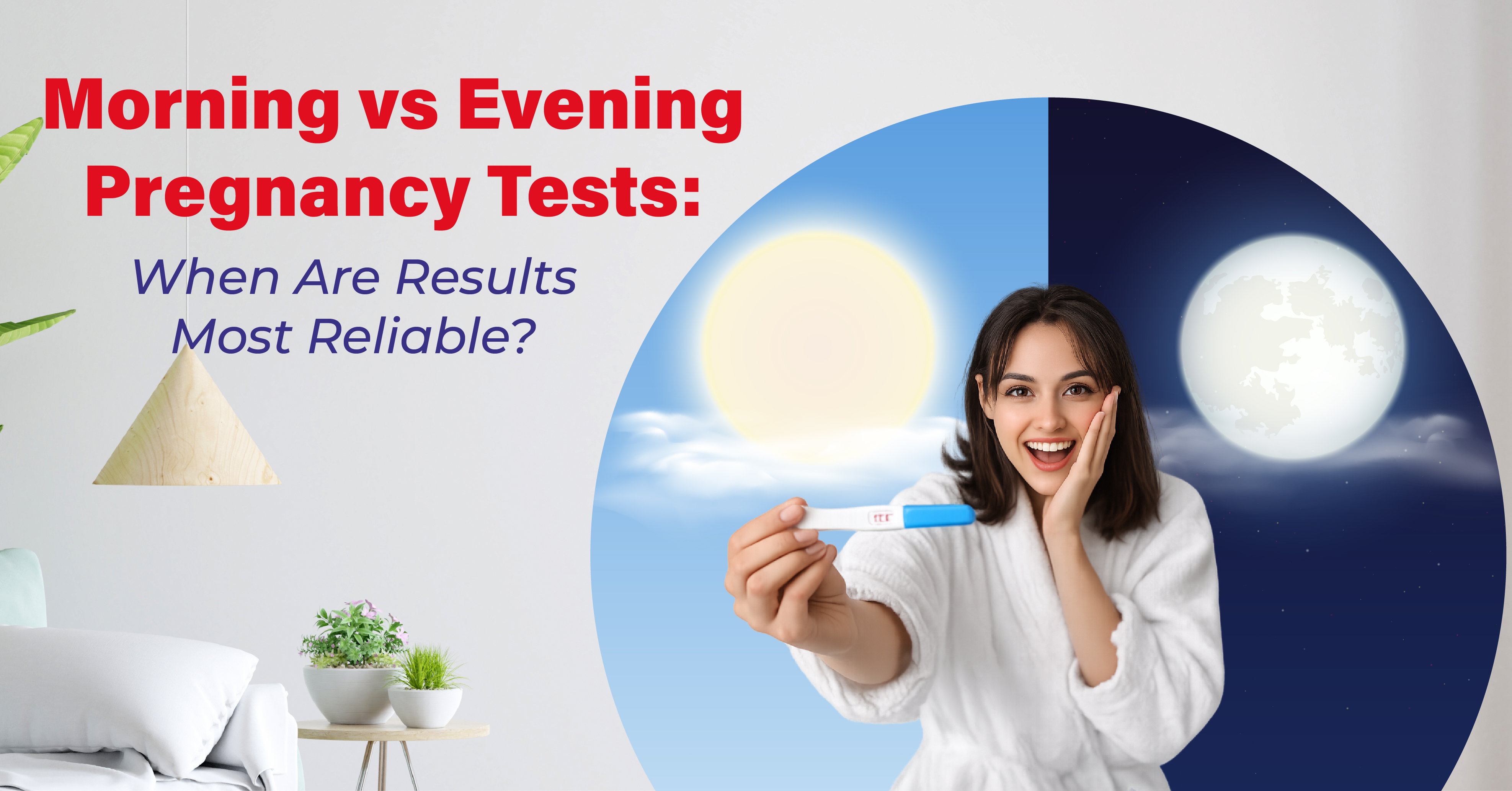
The best time to take a pregnancy test is usually in the morning, especially if you are testing early. A morning pregnancy test kit is more reliable because hCG levels are more concentrated in first morning urine, reducing the risk of false negatives. Evening tests can still work, but timing and hydration matter.
Yes, the time of day can affect pregnancy test accuracy, particularly during early pregnancy. Home pregnancy tests detect hCG (human chorionic gonadotropin) in urine, and its concentration can vary depending on fluid intake and how long urine has been held in the bladder.
Key factors include:
This is why pregnancy test timing accuracy is an important consideration.
During the night, urine remains in the bladder for several hours. This allows hCG to become more concentrated, making it easier for the test to detect pregnancy.
Benefits of a first morning urine pregnancy test:
This improves morning pregnancy test accuracy, especially before or just after a missed period.
In the morning:
This is especially important for early pregnancy test timing, when hormone levels are still low.
An evening pregnancy test can still be accurate, particularly if:
However, testing at night increases the risk of diluted urine, which can affect pregnancy test at night results.
Evening testing may give reliable results if:
Still, for those testing early, morning remains the preferred choice.
| Factor | Morning Test | Evening Test |
|---|---|---|
| hCG concentration | Higher | Lower |
| Urine dilution | Minimal | Possible |
| Accuracy in early pregnancy | Higher | Lower |
| Risk of false negatives | Lower | Higher |
| Best for early testing | Yes | No |
This comparison highlights why many healthcare professionals recommend testing pregnancy morning or night with careful consideration of timing.
hCG is produced continuously after implantation, but urinary hCG concentration varies throughout the day.
This difference explains hCG levels morning vs evening and why early results are more reliable in the morning.
Testing too early or at the wrong time of day is a common reason for false negatives.
Common causes include:
Choosing the right time to take a pregnancy test for accurate results is just as important as choosing the right test.
For the most reliable results:
Using a one-step home pregnancy test kit with clear result indicators helps reduce errors and misinterpretation.
Some early detection tests can identify pregnancy before a missed period, but:
Understanding pregnancy test timing science helps set realistic expectations.
When timing is critical, select a test that is:
A rapid one-step pregnancy test offers convenience and reduces user error, especially during early testing.
Yes, especially in early pregnancy, morning tests are more reliable due to concentrated hCG.
Yes, but accuracy may be lower if urine is diluted, particularly before a missed period.
Retest after 48-72 hours using first morning urine.
Yes, excessive fluids can dilute urine and reduce hCG concentration.
They can be accurate once hCG levels are high, but morning testing is still preferred.
When it comes to morning vs evening pregnancy tests, timing matters most during early pregnancy. Testing with first morning urine offers the highest accuracy and reduces the risk of false negatives. Choosing the right time and using a reliable, easy-to-use pregnancy test can provide clearer, more confident results.

Join Pregaflash for exclusive insights, expert tips, and special promotions. Your well-being matters, and we're here to support you.
Sign up now! - The Pregaflash Team