



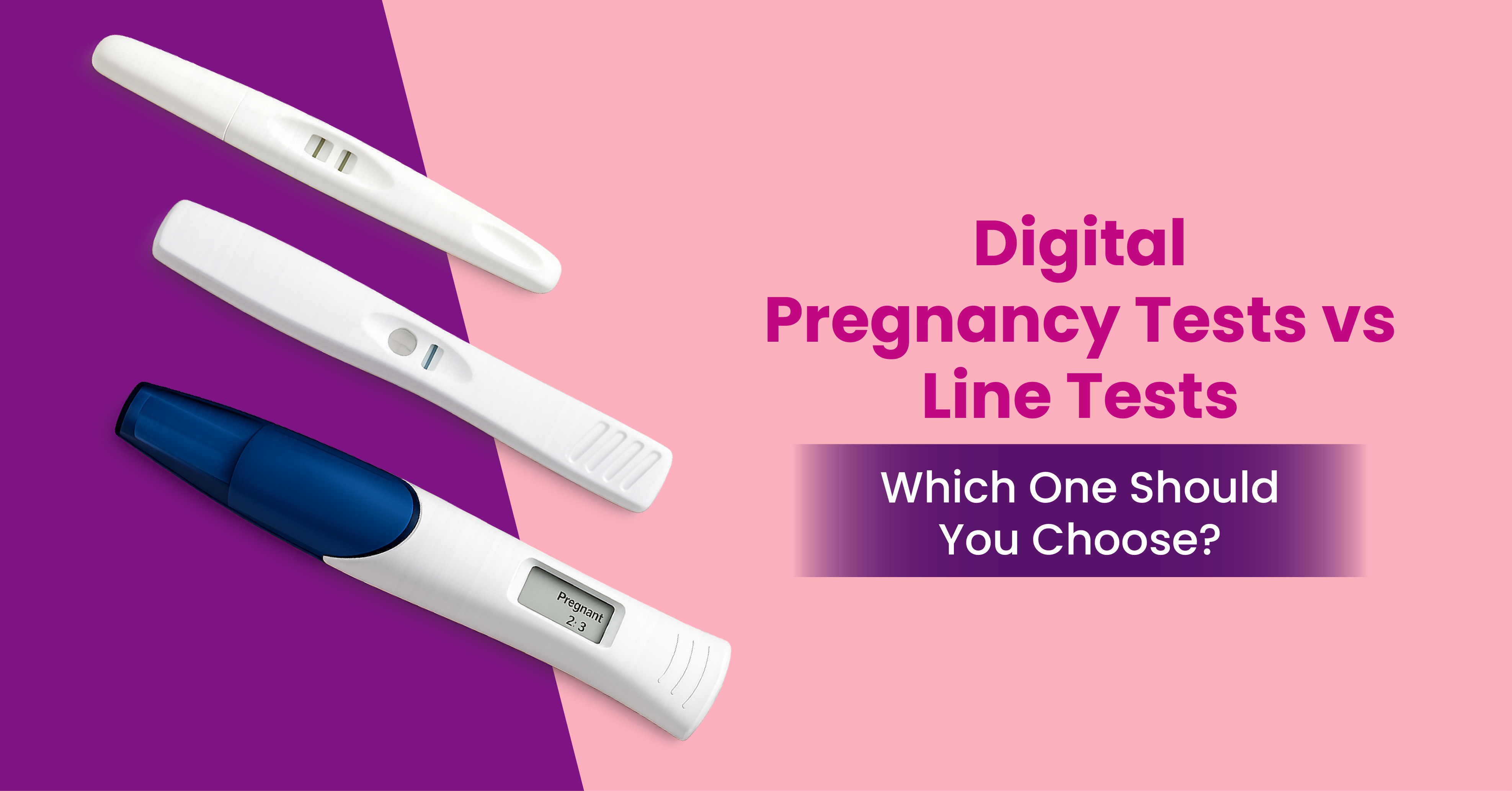
Choosing between a digital pregnancy test and a traditional line test can be confusing, especially when you want quick, clear and reliable results. Both formats are designed to detect hCG in urine, but they differ in how results are displayed, ease of use and overall experience. This guide helps you understand the line vs digital test comparison so you can choose the best option for home use.
A pregnancy test kit detects the hormone hCG (human chorionic gonadotropin), which appears after implantation.
In both digital and line tests:
Although the technology is similar, the way results are shown differs.
A line pregnancy test is the most commonly used format. It displays results using visible lines in a result window.
Line tests are widely used because they are simple, affordable and reliable.
However, interpreting faint lines can sometimes be confusing, especially during early pregnancy.
A digital pregnancy test displays results in words such as “Pregnant” or “Not Pregnant” instead of lines.
This makes it an easy pregnancy test reading option for many users.
However, digital tests are usually more expensive and may require slightly higher hCG levels for detection.
Understanding the line vs digital test comparison can help you decide.
| Feature | Line Test | Digital Test |
|---|---|---|
| Result display | Lines | Words (Pregnant/Not Pregnant) |
| Ease of reading | May require interpretation | Very easy |
| Cost | More affordable | Higher cost |
| Sensitivity | Often detects lower hCG | May require higher hCG |
| Convenience | Simple | Very user-friendly |
Both formats are reliable, but the experience differs.
In terms of science, both tests detect the same hormone, so overall test reliability is similar when used correctly.
However:
Your choice depends on whether you prioritise early detection or easier interpretation.
For early detection:
For clarity:
This makes a combination approach useful—early testing with line tests followed by digital confirmation.
When choosing the best format for home use, consider:
A one-step pregnancy test kit with clear result indicators is often the most practical choice for regular home testing.
To get the most reliable results from any pregnancy test kit:
These steps improve accuracy regardless of the pregnancy test comparison format.
If your results are unclear or inconsistent:
A blood test to confirm pregnancy provides the most accurate result when needed.
Which is better, digital or line pregnancy test?
Both are reliable, but digital tests are easier to read, while line tests may detect pregnancy earlier.
Are digital pregnancy tests more accurate?
Not necessarily. Both formats have similar test reliability, but digital tests reduce reading errors.
Can a line test show a faint positive?
Yes, early pregnancy may produce a faint line due to low hCG levels.
Why choose a digital pregnancy test?
It provides easy pregnancy test reading with clear results like “Pregnant” or “Not Pregnant”.
Should I confirm results after a home test?
Yes, consulting a gynecologist is recommended for confirmation.
The choice between a digital pregnancy test and a line test depends on your needs. If you want early detection, line tests may be more suitable. If you prefer clarity and ease, digital tests offer straightforward results. Understanding this pregnancy test comparison helps you choose the right option and ensures more confident testing at home.



Join Pregaflash for exclusive insights, expert tips, and special promotions. Your well-being matters, and we're here to support you.
Sign up now! - The Pregaflash Team