



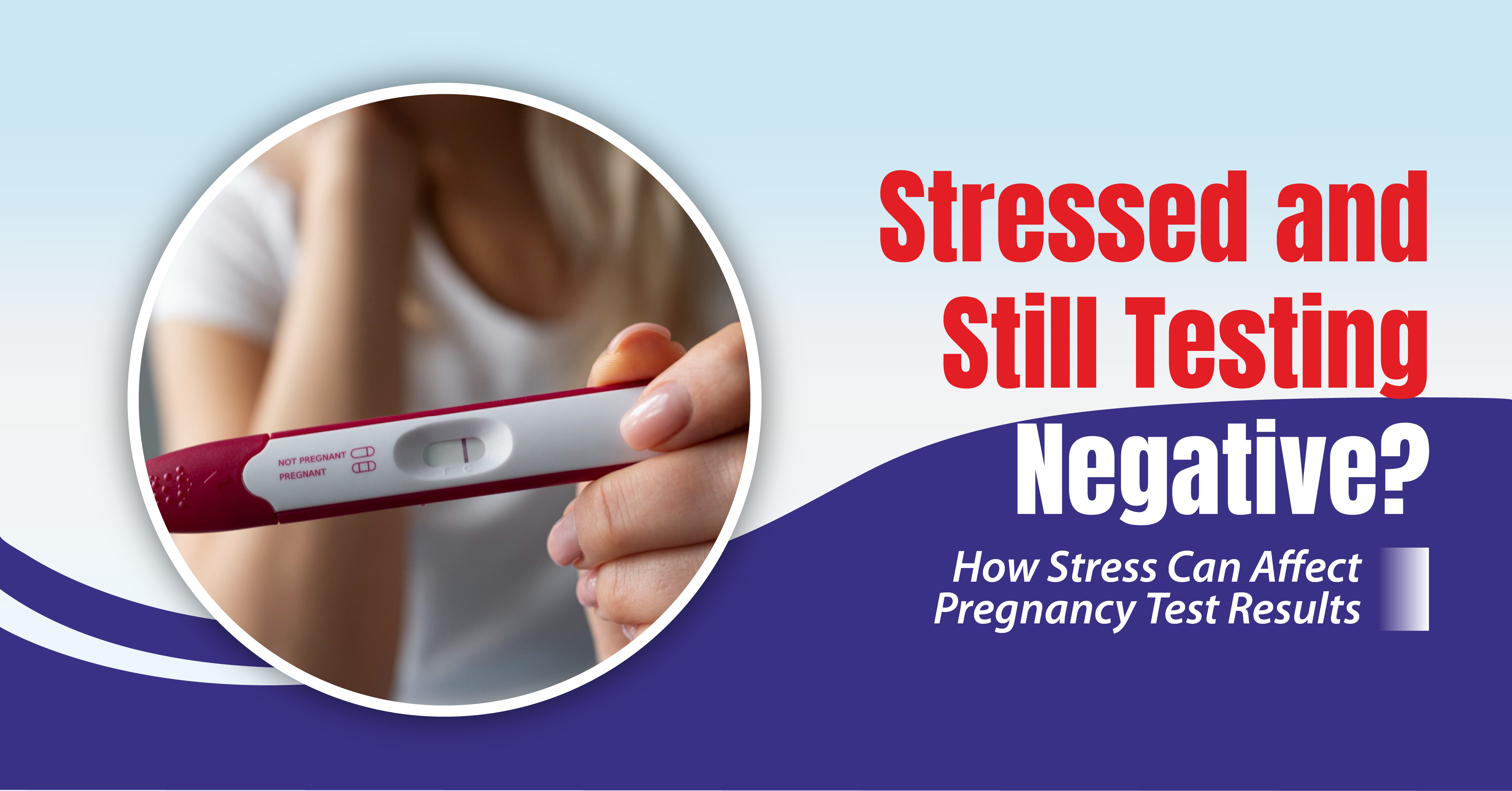
Feeling stressed while trying to conceive and seeing a negative result can be emotionally exhausting. Stress itself does not cause a pregnancy test to turn negative, but it can indirectly affect timing, hormones and implantation, leading to delayed or confusing results. Understanding the link between stress and pregnancy test kit results helps you test at the right time with more confidence.
To be clear: stress does not change the actual result of a pregnancy test. A home pregnancy test detects hCG (human chorionic gonadotropin) in urine. Stress cannot alter how the test strip or one-step pregnancy test reacts to hCG.
However, stress can affect your body, which in turn can influence:
This is why many people feel stressed but pregnancy test negative, even when conception may have occurred.
High stress levels can interfere with the brain-hormone connection that regulates your cycle.
Stress increases cortisol levels, which can affect reproductive hormones such as:
This disruption may delay ovulation or even cause an anovulatory cycle (a cycle without ovulation).
If ovulation happens later than expected, conception also happens later. This often leads to:
This explains why many search for can stress delay positive pregnancy test.
After fertilisation, implantation usually occurs 6-10 days later. Chronic stress may affect uterine receptivity, potentially delaying implantation by a few days.
When implantation is delayed:
This can result in a stress and late positive pregnancy test, where the test turns positive only after several days.
Stress does not reduce hCG levels once pregnancy is established, but it can delay when hCG first appears in urine.
Key points:
This is why stress and hCG levels are often misunderstood.
A false negative pregnancy test occurs when you are pregnant but the test shows negative. Stress contributes indirectly by:
The test itself is accurate, but the timing is off.
Anxiety does not affect the chemistry of the test, but it can affect:
Reading results outside the recommended time window or testing multiple times a day can increase confusion.
Using a reliable one-step pregnancy test with clear result indicators helps reduce misinterpretation during anxious moments.
If stress levels are high, timing becomes even more important.
High-quality rapid pregnancy tests, like one-step tests designed for early detection, offer clearer results when used at the right time.
Common reasons include:
This situation is common and does not always mean pregnancy has not occurred.
When emotions are high, using a test that is:
can make a difference. A one-step home pregnancy test reduces handling errors and provides straightforward results, helping ease anxiety.
For best confidence:
Yes, stress can delay ovulation or implantation, which delays detectable hCG levels.
No, stress does not affect test accuracy directly, but it can lead to testing too early.
Hormonal changes, stress and early testing can cause pregnancy-like symptoms before hCG is detectable.
Wait 48-72 hours and retest using first morning urine.
Anxiety does not lower hCG, but it may delay when hCG first appears due to delayed implantation.
Stress is a powerful factor that can affect your cycle, timing and testing experience - but it does not mean your result is final. If you are stressed and still testing negative, give your body time and test again using a reliable, easy-to-use pregnancy test kit. Clear understanding and correct timing can bring clarity during an emotionally sensitive phase.

Join Pregaflash for exclusive insights, expert tips, and special promotions. Your well-being matters, and we're here to support you.
Sign up now! - The Pregaflash Team